JEE Advanced · Chemistry

Biomolecules and Polymers PYQs

30 previous-year questions from Biomolecules and Polymers in JEE Advanced, 2009–2026, latest first.

Q1JEE Advanced · 17 May 2026 · Paper-2
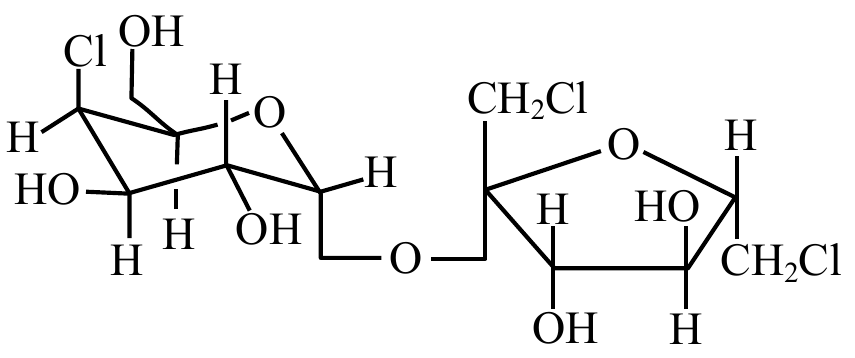
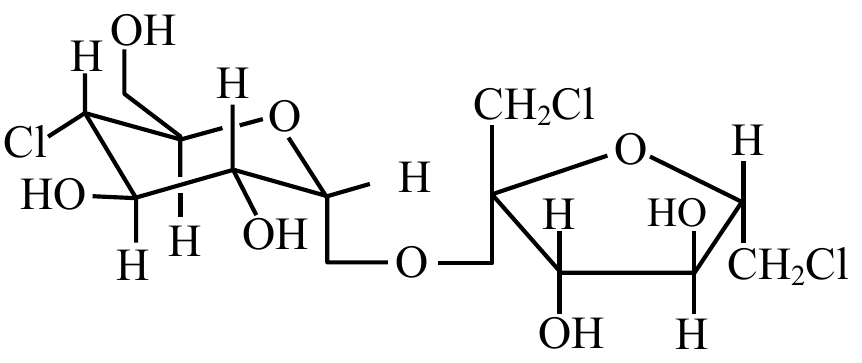
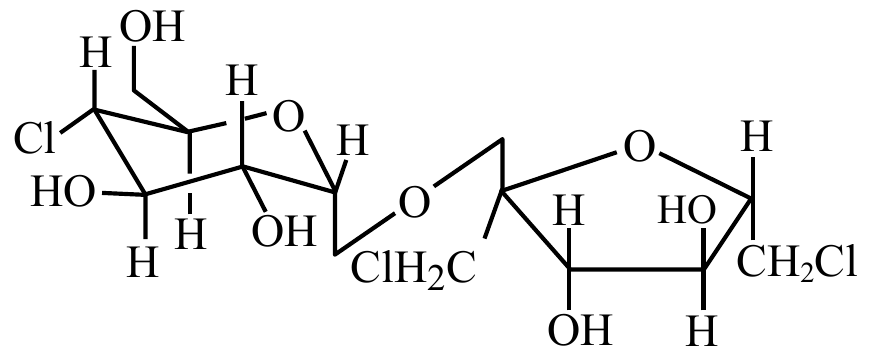
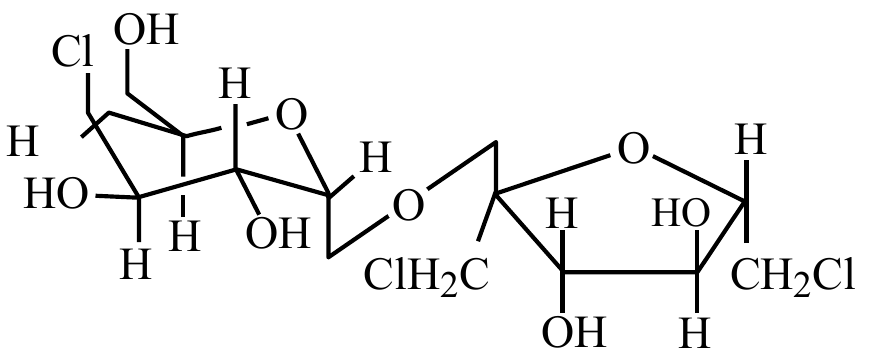
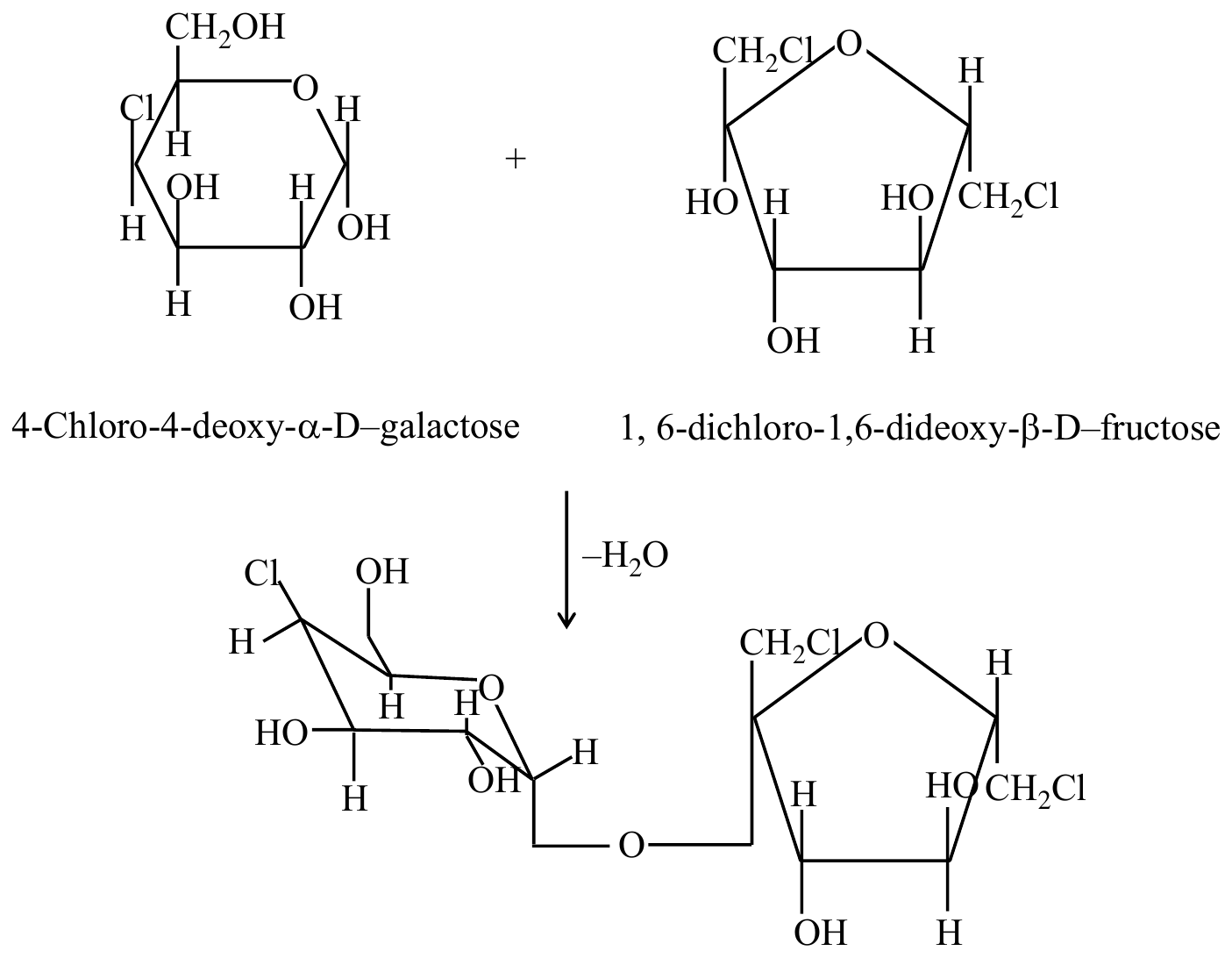
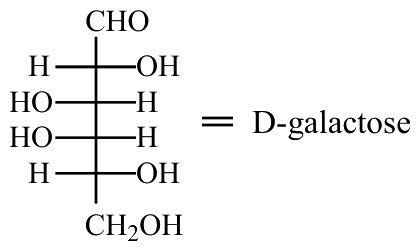
A known artificial sweetener X is composed of 4-chloro-4-deoxy-α-D-galactose and 1,6-dichloro-1,6-dideoxy-β-D-fructose joined by a glycosidic linkage. Structure of D-galactose is given below: figure The correct structure of X is:
Question 1
  1. (A)Option A
  2. (B)Option B
  3. (C)Option C
  4. (D)Option D
Show answer & solution

Answer: A

figure X is sucralose: the C1 of the α-galactopyranose unit (Cl at C4) is linked through O to C2 of the β-fructofuranose unit The fructose unit carries CH2Cl groups at C1 and C6 ⇒⇒\Rightarrow structure (A)
Solution
Q2JEE Advanced · 17 May 2026 · Paper-2One or more correct
The correct statement(s) regarding sugars is (are) Given: Specific rotations of L-(−)-glucose and L-(+)-fructose are −52.5∘{}^{∘\circ} and +92.5∘{}^{∘\circ}, respectively.
  1. (A)On treatment with HNO3, gluconic acid is oxidized to saccharic acid, whereas glucose is not oxidized to saccharic acid
  2. (B)Fructose gives a positive Fehling's test because it isomerises to glucose and another aldohexose in the presence of Fehling's reagent
  3. (C)Invert sugar is an equimolar mixture of D-glucose and D-fructose formed after hydrolysis of the corresponding disaccharide
  4. (D)Specific rotation of invert sugar is −40∘{}^{∘\circ}
Show answer & solution

Answer: B, C

(A) Both glucose and gluconic acid give saccharic acid with HNO3 ✗ (B) In base, fructose tautomerises via the enediol to D-glucose and D-mannose ⇒⇒\Rightarrow positive Fehling ✓ (C) Hydrolysis of sucrose gives equimolar D-glucose and D-fructose ✓ (D) D-sugars: (+52.5∘{}^{∘\circ} − 92.5∘{}^{∘\circ})/2 = −20∘{}^{∘\circ} ✗
Q3JEE Advanced · 17 May 2026 · Paper-2Numerical answer
In the following reaction sequence, major products X and Y are acyclic monomers. CH3I →→\rightarrow X [1. KCN; 2. H3O+, Δ; 3. Red P, Br2; 4. NH3 (excess)] Caprolactam →→\rightarrow Y [H3O+, Δ] 500 mol of X completely reacts with 500 mol of Y to give 1 mol of a single biodegradable acyclic copolymer Z as the only product. The amount of Z formed in grams is _____. Given: Atomic mass (in amu): H : 1, C : 12, N : 14, O : 16, Br : 80
Show answer & solution

Answer: 85018

X = glycine (NH2CH2COOH, M = 75); Y = 6-aminohexanoic acid (M = 131) Z = nylon-2-nylon-6: 1000 monomers joined by 999 amide bonds Mass = 500 ××\times 75 + 500 ××\times 131 − 999 ××\times 18 = 85018 g

27 more Biomolecules and Polymers questions

Practise them free

Practise all 30 Biomolecules and Polymers PYQs

Untimed with solutions, or as a timed test. Your mistakes are saved so you can retry them.

Start free